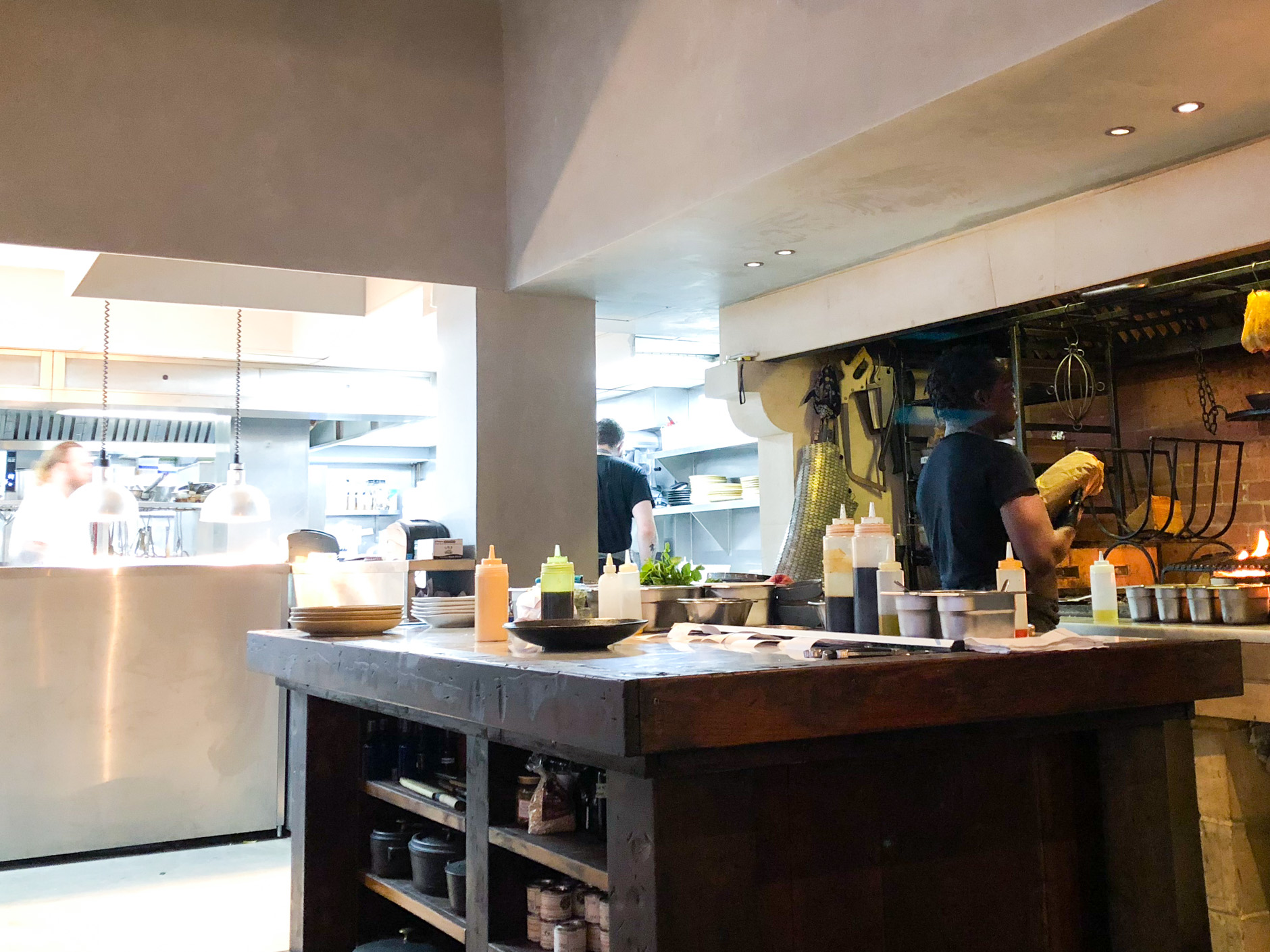
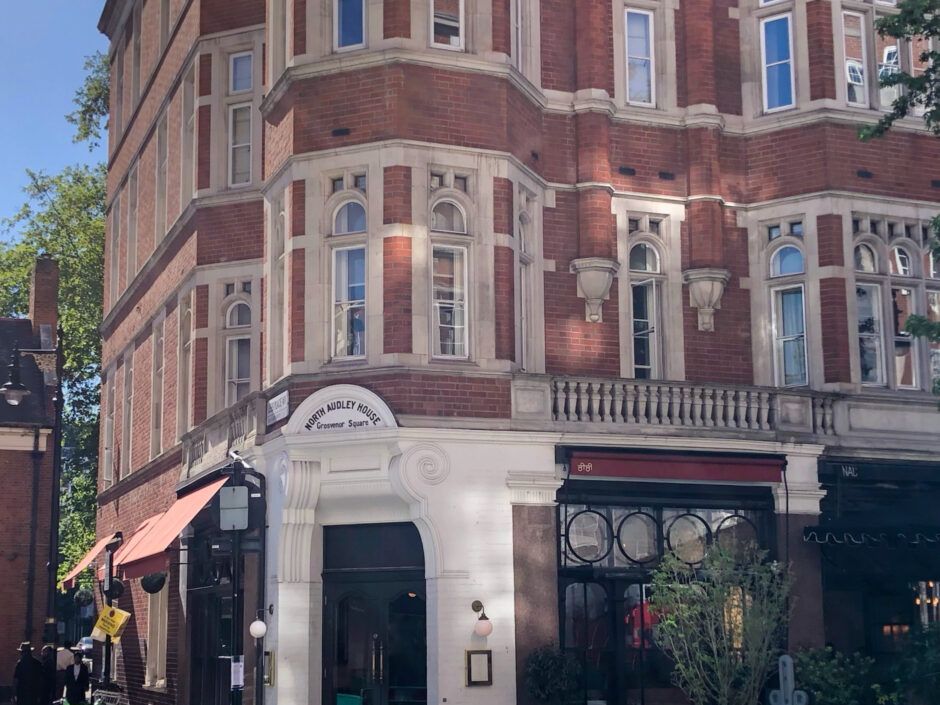
The BiBi I met back in 2021 was a newly-opened casual-ish restaurant serving flavourful Indian small plates and cocktails of the bright and simple kind. Opening at the tail end of the pandemic, this restaurant was one of my first mask-less, QR-code-less experiences of the year and what a delight it was. Headed by chef Chet Sharma, I felt the experience back then was something special, and I enjoyed my first reservation so much that before I left I made another for the following week. BiBi had the irresistible promise of a new and exciting restaurant: optimistic, modern Indian cookery with a capital M. I was later reunited with Sharma’s cooking at Pavyllon, where he and Yannick Alléno produced a four hands menu that reignited my love for his work. A revisit to BiBi was overdue, and a few months later I have finally returned.
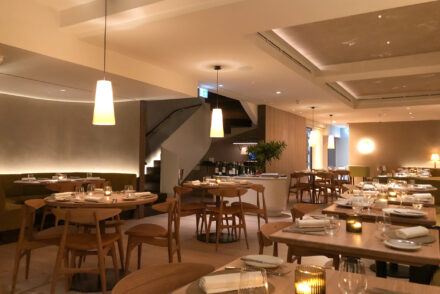
Whilst the restaurant remains polished and inviting with a beautifully crafted counter opposite the open kitchen, the current menu bears no resemblance to its former self. Soho style small plates have been replaced with a tasting menu that encourages you to chomp through some of the lesser-known flavours and regions of India. Some courses on the menu change frequently, with morels, truffles and other produce appearing at their best and disappearing at the end of their season. Priced at £145, the chef’s selection menu spans seven courses (and a few additional bites), and is described by the restaurant as “progressive”, which I think loosely translates to: no you can’t have chicken tikka and a garlic naan. Today’s BiBi is all grown up: the cocktail list is now award winning, the menu is tighter and now boasts a £70 N25 caviar supplement. In a market of increasingly dumbed down food, BiBi chose to get smarter, and I couldn’t be happier about it.
The first bite on this visit was a Wookey Hole papad that rose from its dish like a magnificent Cheddar totem, to be dipped into a layered bowl of cultured cream, mango and coriander chutneys. It’s a nod to the curry house favourite, but thoughtfully elevated – the three components of the dip worked in glorious harmony. Then, a steaming bowl of mushroom chai, the last sip of which included a mouthful of crunchy toasted buckwheat. It was woody and savoury, with a dash of smoked tea oil giving a fragrant finish.
My rematch with BiBi vastly exceeded my expectations; this place has evolved beautifully. I found the menu to be both joyful and meticulously thought out
An array of small bites arrived, the best of which was the chickpea sponge with mooli (Indian radish) and black truffle. Sharma showcases these humble ingredients in their Sunday best, to great effect. The whipped lentil fritter halibut and tomato chutney was the least successful of these initial bites – lacking moisture and texture, I could have done without it (which of course did not stop me gulping it down with a generous swig of Billecart-Salmon). Still, this was the strongest start to an Indian fine dining menu that I can remember, and palate sufficiently whetted, the first course, Hamachi and blood orange Nimbu Pani (with the N25 supplement – why not), was everything I’d hope it would be. The presentation was somewhat chaotic but the components were well organised – fat slithers of Hamachi, with subtle acidity, delicate herbaceousness and the nuttiness of the N25 made this a well-rounded dish.
The sudden lick of throat tingling heat from the Mangalori crab Idli (South Indian rice cake) was a potent reminder that although this is a fine dining menu, chef Sharma is brave enough to turn up the heat when appropriate. This elevated take on fiery Mangalorean crab was clever, three components made exceptionally well, cut by sharp citrus. This course was a nod to the future – an abstract take on Indian cookery, deceptively complex despite being plated like a modernist painting.
In the early days, the paneer at BiBi was one of the most loved dishes and I was pleased to see it had survived the menu changes. This is a beautiful ingredient – the paneer is made in the Cotswolds and the seasoning is just perfect – it arrives with two peppercorn sauces, the Timut pepper (a rare and aromatic peppercorn similar to Sichuan) adds a reassuring tongue tingle, and a little wild garlic. Having ordered one paneer and one wagyu, I felt the garnish better suited the paneer and this was my favourite plate of the two. I wasn’t convinced about applying the exact same sauces to both the paneer and wagyu and felt the wagyu would have benefitted from a different treatment.
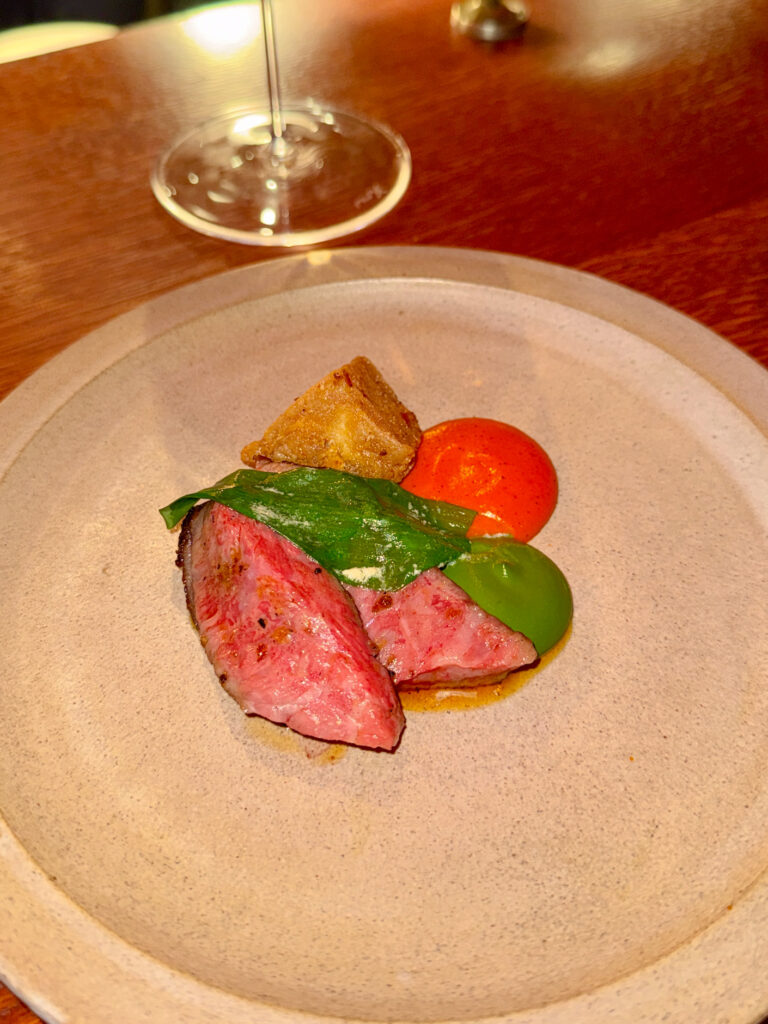
Achari British Wagyu
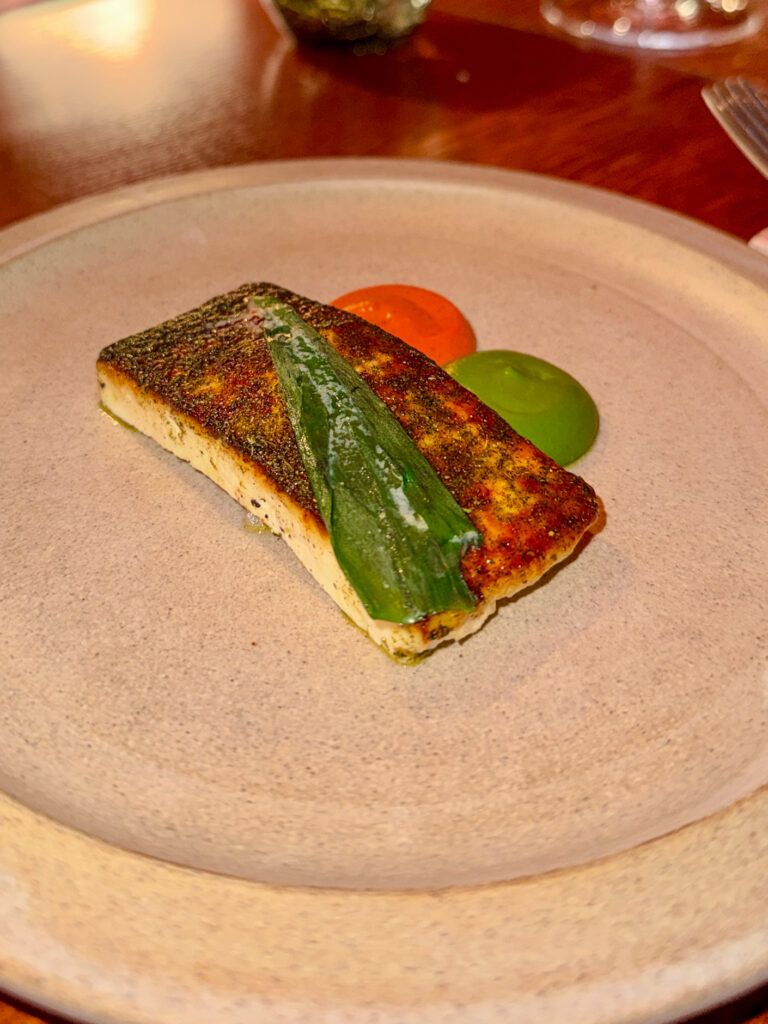
Cotswolds Paneer
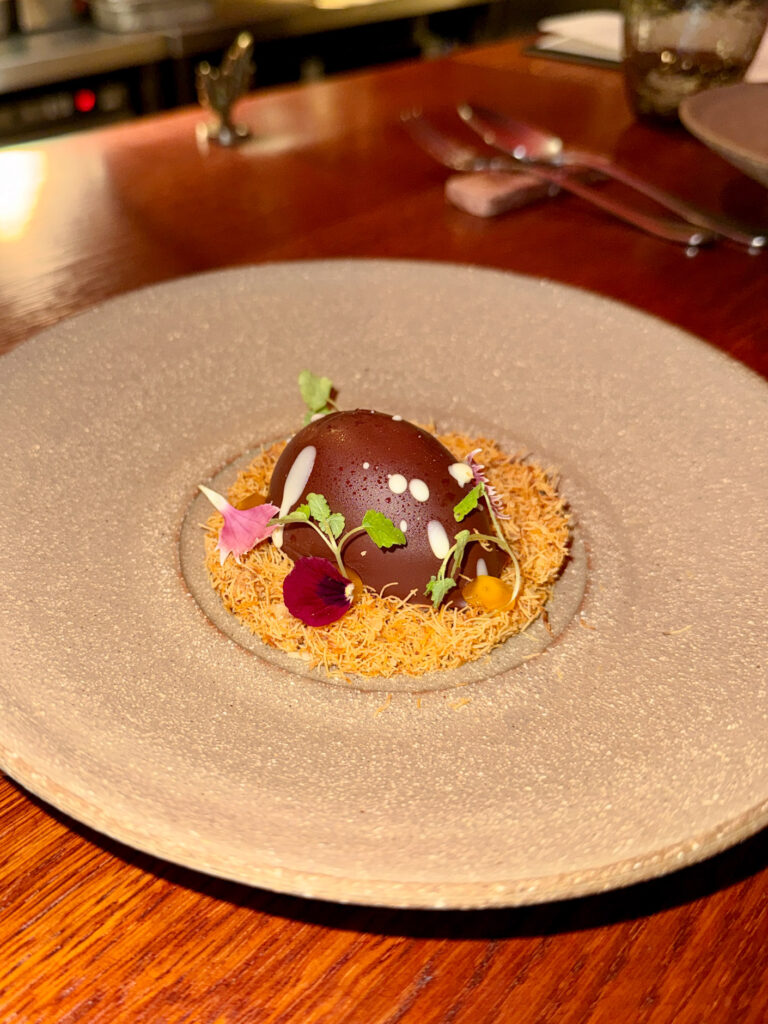
Shah Babur’s saffron egg
Now for a bit of fun: Texel Lamb Nihari. Lamb Nihari would usually be a slow cooked stew, but is reimagined at BiBi as a 24hour cooked fork-tender lamb neck in an airy little bun with a sprig of coriander and some pickly bits, to be dipped into a steaming bowl of punchy curry sauce. It was truly orgasmic to eat (a finger bowl is needed).
BiBi’s signature dish is Sharmaji’s Lahori chicken. The recipe has been passed down by Sharma’s grandfather, and comes accompanied by rice, black dal and pickles. The spicing is very sophisticated – the sauce combines some 45+ ingredients, with buttery cashews cut by tangy yoghurt whey, and is light, fragrant and comforting. Even the rice isn’t just rice; instead it’s a riff on a Yakhni Pilau: fluffy rice cooked in rich chicken stock and topped with popped wild rice. The dal is enriched with ghee and there’s plenty of it. It’s very rare that I can muster excitement over a chicken breast, but this was one such rare occasion. The Lahori Chicken is easily of Michelin standard and was the star dish of the menu.
A rhubarb sorbet with cream cheese granita drags you back to the future – it’s an unusual pairing but it works, and I would have been more than happy to have finished the meal at this point. Instead, to follow was “Shah Babur’s Saffron Egg”. Inspired by a Mughal emperor, it’s very big and very sweet, with potent saffron, banana mousse, pineapple and a too-thick chocolate eggshell. Sadly this didn’t work for me, and I didn’t feel it was in the same league of culinary cleverness as the rest of the menu. A spoonful sufficed. Instead, I scoffed down the petits fours – a rose macaron and a passionfruit and chilli jelly – these were well-made and ended the tasting elegantly. Finally, clutching signed menus and a BiBi chocolate bar each, we tipped out of the restaurant onto North Audley Street, well-fed and inspired.
BiBi is offering the most interesting Indian fine dining I have experienced in London, and it’s difficult to understand (given the quality of ingredients, polished service and creative, sharp cookery) why they have been overlooked by The Michelin Guide whilst inferior restaurants offering a fraction of the finesse somehow coast through. My rematch with BiBi vastly exceeded my expectations; this place has evolved beautifully. I found the menu to be both joyful and meticulously thought out. I sensed this was a true labour of love by a chef who combines his futuristic vision with a well-trained hand and a remarkable talent for spicing. I shan’t wait another five years, or even another five days. I’ve shamefully rebooked again.
42 North Audley Street
London
W1K 6ZP
May 2026