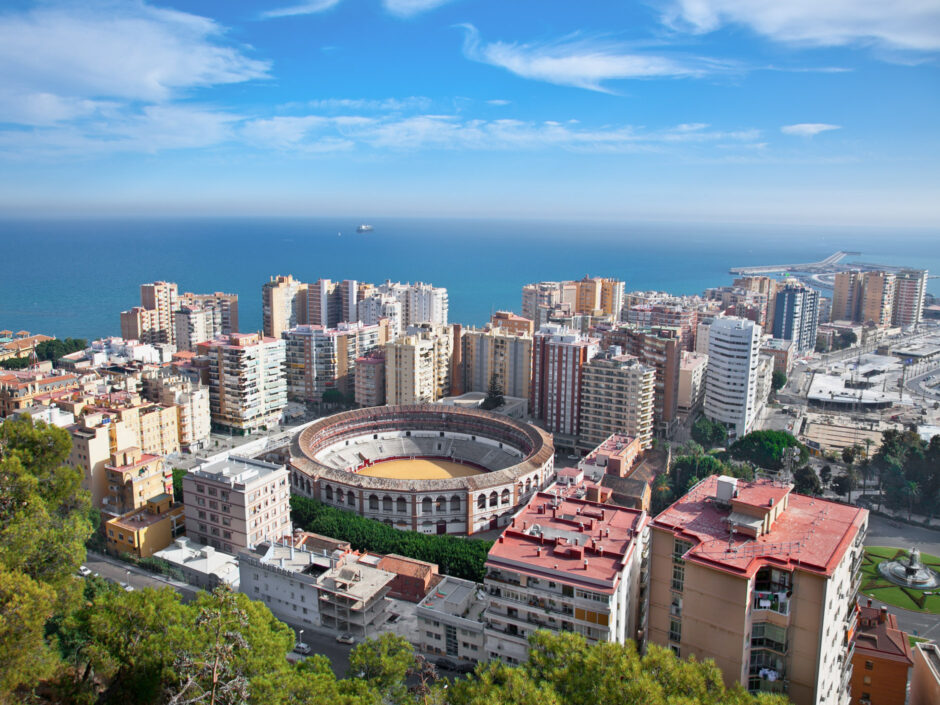
There’s a salty breeze in the air as I wander Málaga’s glistening – truly, impressively clean – streets. The city feels permanently sun-soaked; it’s best enjoyed early in the morning before the temperature climbs and while the previous night’s revellers are still groaning in their hostel beds. Málaga is delightfully walkable; while parts of the old town can feel overrun at night time, there’s plenty to relish on a city break. The scent of garlic and grilled seafood drifts from countless street corners, both in the centre and beyond. Birthplace of Picasso, ajoblanco and locals who swallow half of their syllables, it’s a city I enjoyed far more than I expected to.
On a recent trip there, I moved from one standing table to the next on a distinct mission: jamón, vermouth, fresh seafood and little else more complicated than that. There is plenty more to go back for, but a few tapas bars stood out to me along the way. Here are my recommendations for a tapas crawl through Málaga.
La Tranca
Three visits in as many days should tell you everything you need to know about La Tranca. Bustling, chaotic and old school, it’s instantly welcoming and really rather hard to move on from. Despite the raging summer heat outside, La Tranca’s cave-like interior and lack of outdoor seating don’t feel off-putting. The narrow room encourages barstool dining or good old fashioned standing at the counter. Traditional Spanish records line the walls behind the bar, their music playing at all hours of the day. You’ll rarely hear a word of English spoken inside, which is both odd and a great relief, given that the epicentre of Málaga nightlife – Plaza de Uncibay – is just a stone’s throw away.
Known for its empanadas – beautifully thin, springy pastry with generous fillings (the herby chicken and mushroom is a winner) – and silky, citrusy house vermouth, La Tranca is packed with Málaga locals at all times of day. For me, the best part of the Tranca experience isn’t the prices (a beer or vermouth will set you back €3) or the impossibly friendly staff, but the fact that your bill is written in chalk on the bar in front of you. It doesn’t matter whether you’re standing, sitting or squashed against the bar; your chalk-scrawled tab is your only route to payment. There’s something perfectly nostalgic about La Tranca, and I hope Málaga never changes it.
After three days I left with a conviction that Málaga might be one of Spain’s most underrated food cities
Hasta los Andares
With its black plastic chairs and oddly gothic signage, Hasta los Andares is easy to overlook. Located on a quiet street in Málaga’s Soho neighbourhood, it really doesn’t appear to be much more than a standard watering hole. But if you’re craving some proper jamón iberico en route home from Málaga’s sprawling main beach, I implore you to make a pit stop. Jamón is the central theme here, not only on the menu, but in the next door shop and deli dedicated to the stuff.
We opt for the acorn-fed jamón tapas plate, because what else would we be here for? At around €7, it’s a generous serving of salty, fatty jamón that melts on the tongue, accompanied by mini breadsticks and olives for good measure. Washed down with an ice-cold caña, I struggle to think of a better way to spend €10.
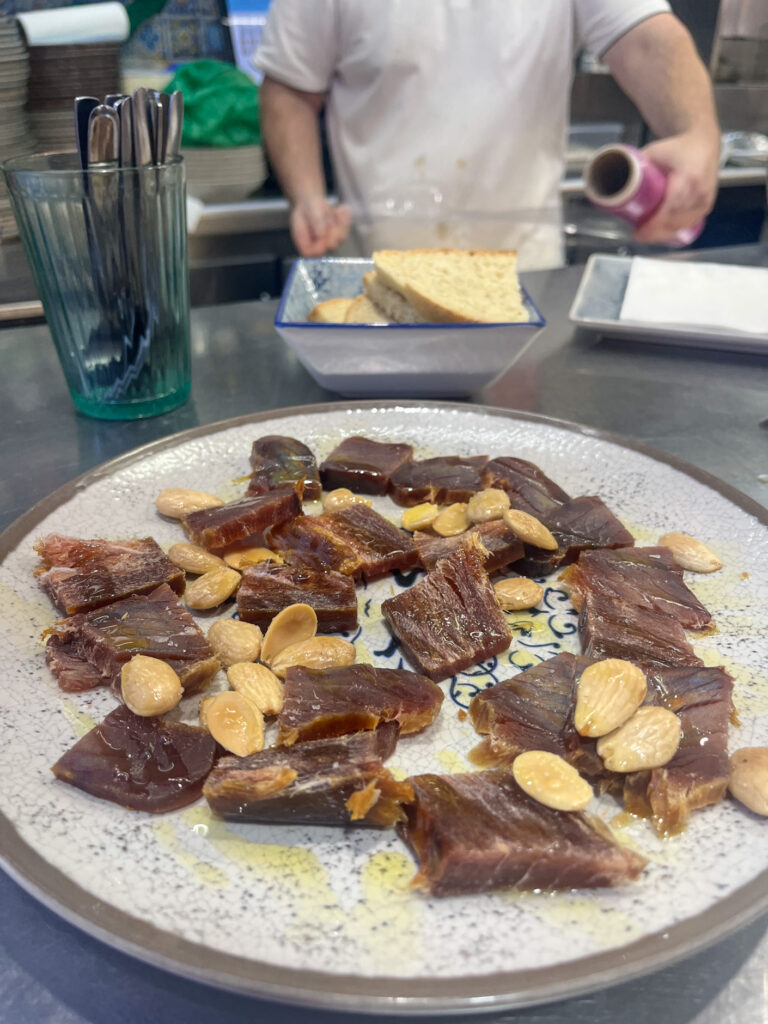
Mojama at Bar El Central

Empanadas and vermouth at La Tranca
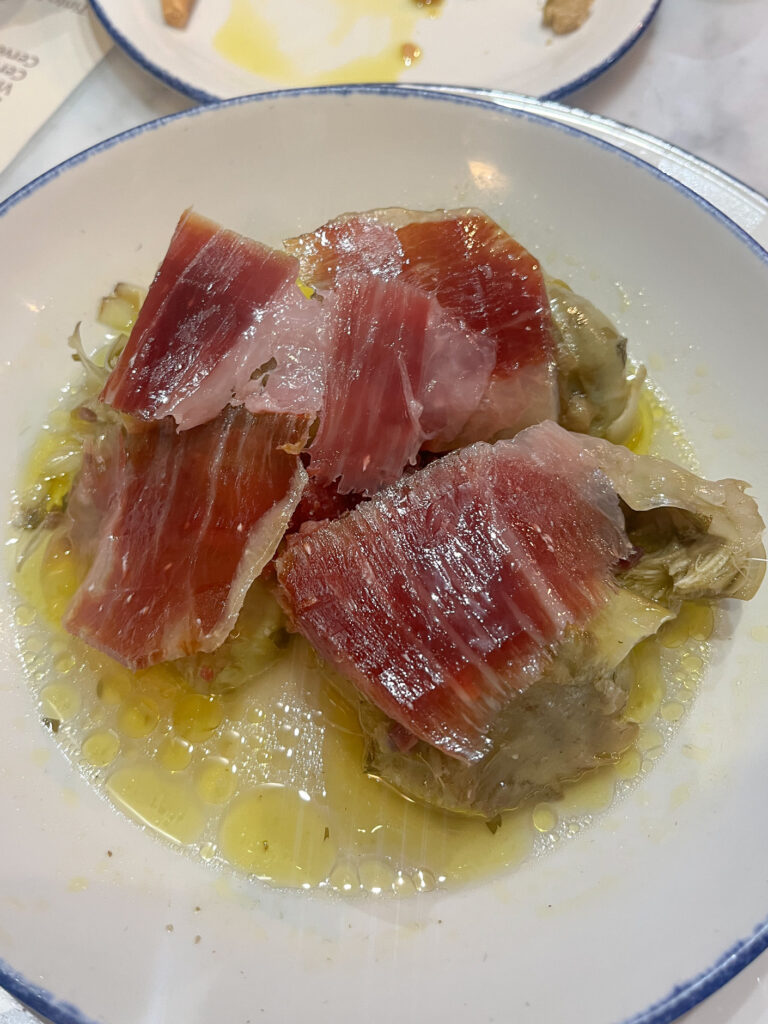
Confit artichokes and jamón at Mesón Mariano
Bar El Central
The busy but brilliant Mercado Central de Atarazanas is Málaga’s central Neo-Moorish food market and an architectural feat in its own right. Designed by Joaquín de Rucoba and constructed in the 1870s, the iron hall is crowned by a stained-glass window and is worth visiting even if you have no intention of buying anything. Inside, fresh fish stalls, butchers and grocers sit alongside a small cluster of tapas bars, with locals still haggling and snacking in equal measure. Thankfully, it hasn’t yet reached Time Out Lisbon levels of tourist frenzy.
Hidden within the market, Bar El Central is a standing-only fish counter surrounded by near-identical, equally popular spots. This particular counter was recommended by a local, so we followed their lead. El Central is run by owners Javi and Bea, and remarkably no crowd seems too much for them. We order two traditional dishes recommended by the chef: mojama and conchas finas.
The former is sliced cured tuna, served with good olive oil and roasted Andalusian almonds. Known as the ‘ham of the sea’, it’s meaty, savoury and only faintly fishy – you’d be forgiven for mistaking it for jerky.
The conchas finas – Málaga’s signature large clams – are grilled to order and served in their shells, sitting in a pool of garlic and parsley oil. Plump, fresh and firm, they sit somewhere between a mussel and a clam, rich enough to stand up to the punchy dressing.
Mesón Mariano
Finally, artichokes. What else could complete the circuit? If jamón defines Hasta los Andares, artichokes belong to Mesón Mariano. Of course, there’s more on offer – crisp, creamy oxtail croquettes among them – and a queue that begins before the doors open at 8pm.
Mesón Mariano is known for its chivo (young goat) – which, regrettably, I didn’t manage to try – and its artichokes in all forms: grilled, confit or fried. By the time we arrived, confit artichokes and jamón were all that remained, though it hardly felt like a compromise. The artichoke hearts are rich and buttery, tender yet firm, with a depth of flavour that speaks to their freshness. Excellent vermouth and a rustic, unpretentious interior round things out perfectly.
After three days of floating between beach, bar, restaurant and bar again, I left with a stronger appreciation for artichokes, cured tuna and vermouth, and a conviction that Málaga might be one of Spain’s most underrated food cities.
This travel guide was published in July 2026.
Cover photo of Málaga licensed by Adobe Stock. All other photos by Vicky Morrison.