
As apples and pears are in season, and World Calvados Day is on the third Thursday of October, this is the ideal time to celebrate this brandy. But there is much more to this than UK consumers may realise, including its origins in Normandy, how it may complement iconic dishes such as tarte Tatin, and where to buy the best products. In this interview, founder of Norman Soul, Ted Guesnon (TG), discusses Normandy, Calvados and lower ABV alternatives (such as Sparkling Pear) with Palate editor J A Smith (JS), as well as ideas for pairing food with Calvados, cocktail recipes, the concept of the “trou Normand” and the challenges of running an independent international business.
JS: Normandy can be a bit overlooked as a tourist destination in France; it’s known for the D-Day landings and the Bayeux Tapestry (which has just moved to the UK), though visitors to France may not appreciate its natural bounty (particularly apples) and that Rouen was made Unesco’s Capital of Gastronomy in 2021. What’s your interest in this region and how would you sell it to anyone visiting France?
TG: Normandy, despite being physically in France, has very deep roots with England. Many people have heard about William the Conqueror, but few know that Normandy had its own independent territory with its own Norman identity, ruler and law. When Normandy conquered England, both countries were bound to make only one. Visitors from England can come and visit the place where their former King is buried, in his home town of Caen. Aside from history, visitors can explore the beautiful countryside with stone villages, stunning western beaches around Granville, and down to Mont Saint Michel. On the gastronomy side, Normandy is well known for its Andouille of Vire (a bit like a Scottish haggis), Camembert, Livarot or Pont l’Eveque but also tarte Tatin and apple pies. Of course, we pair all our dishes with our dry ciders, Calvados and Sparkling Pear.
JS: Calvados is of course one of the most famous brandies from Normandy. For the uninitiated, how would you describe it and why are your products unlike anything else in a supermarket?
TG: Calvados is a brandy made from the distillation of apples or pears, and can only be called by this name if it has been produced in Normandy (similar to Cognac). Depending on multiple characteristics such as the fruit varieties, the season, the soil and the distillation process, you will taste completely different Calvados. That’s where our products are different: by sourcing from small family-run businesses in the deep countryside, we can select producers that spend more time on mastering their brandy than doing marketing. All our products come from distilleries based in the Domfront region, specialising in Calvados made from pears with a bit of apples, producing smoother brandy, and account for only 1% of the total Calvados production.
JS: Can you tell me more about your Sparkling Pear drink? It sounds delicious.
TG: Our Sparkling Pear is made 100% from one particular pear variety native to Normandy, which offers a well-balanced sparkling drink. It is organic, with natural small bubbles and is obtained by the same process we can find in Champagne. At a gentle 4.5% ABV, this is perfect for those that want a low alcohol alternative to Champagne or Prosecco, or simply do not like the taste of wine. We use it in Normandy to celebrate birthdays, weddings or simply to spoil yourself at home.
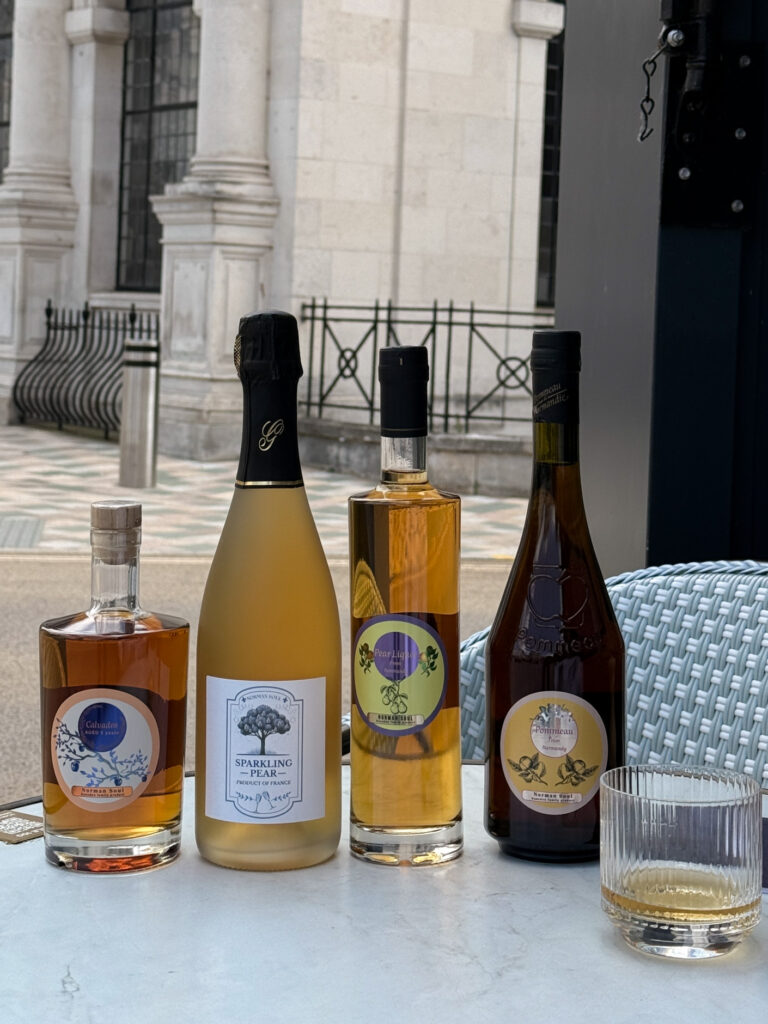
Norman Soul products
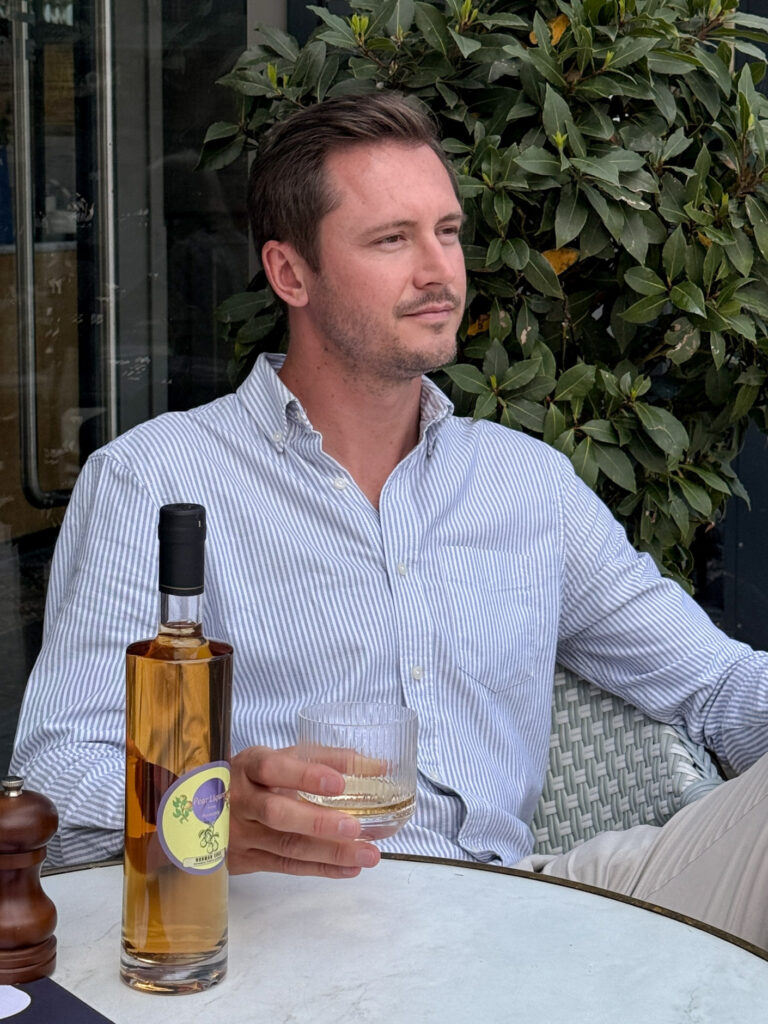
Ted Guesnon, founder of Norman Soul
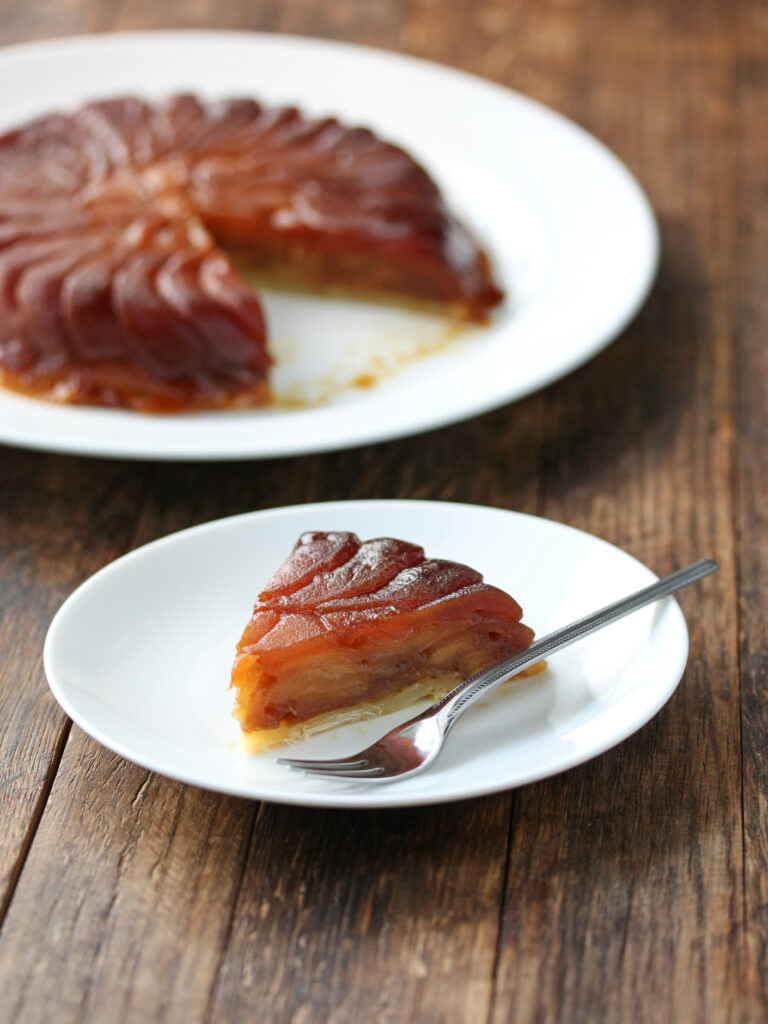
Tarte Tatin
JS: What prompted you to start your business? What would be your advice to an entrepreneur intending to do something similar?
TG: Every year we travel to Normandy to see my family, and once when I left to return to the UK I felt I needed to do something for the community in Normandy. I listened to a podcast with my wife and James Watts was talking about how he started. I found his story inspiring. I thought small producers deserved more attention and that Calvados was underrepresented in the UK, while Whisky, Cognac and even Tequila were everywhere. I then decided later to complete my offering with a floral Pear liqueur, Pommeau and Sparkling Pear.
My advice would be to do lots of research to understand the various dynamics in the market, regulations and your main competitors. Most importantly, I would recommend identifying your strengths but also your weaknesses, and to delegate areas where it is better to leave an expert doing the task. Finally, I think this is a learning process that you must enjoy, because it does require a lot of energy and time.
JS: As a business based in the UK but dealing with French producers, presumably Brexit has created a few trade obstacles for you. How have you overcome these issues?
TG: The whole process required a lot of research in the regulatory environment, and carefully selecting the right partners was key. Brexit, but also France, means a lot more administrative paperwork to be compliant. Therefore, I decided to outsource some critical part to professionals where it was required.
JS: Where can we find your products in the UK, other than via your website?
TG: Our online website www.normansoul.co.uk but we are also present in restaurants, brasseries and other businesses enabling people to see and taste the products. We are stocked in several shops and restaurants in London such as Gazette, Mon Plaisir, Wolfox Coffee in Covent Garden, but also in Essex at Downham Hall, Food in Leigh-on-Sea and Emerald in Chelmsford.
Currently, we are looking to expand into the wedding market for our Sparkling Pear.
JS: Also for the uninitiated, can you explain the concept of the “trou Normand”?
TG: The trou Normand is an inter-course tradition between the main and the cheese, but it is more than that. While it is a simple apple sorbet topped up with Calvados, it will help you digest and enjoy a long dinner at the table. It is therefore the idea of appreciating time eating, drinking but most importantly socialising with your friends and family.
JS: What’s your favourite dish to pair with Calvados? And does it work with cheese, like Camembert for instance?
TG: My favourite dish to pair with Calvados is a tarte Tatin with a vanilla sorbet on the side. The Calvados will bring additional flavours of spices that the tarte would not on its own. The pairing with Camembert, Livarot or Pont l’Evêque works very well, but it works also well with stronger cheese like Stilton or Black Bomber Cheddar.
JS: What about cocktails? I’ve seen a Calvados Negroni (a “Calvagroni”) before in France but feared it might not work, being so apple-forward but it offsets the usual bitterness and works well as a digestif. Do you have any recipes for Calvados-based cocktails you can recommend?
TG: Cocktails are also an area I am exploring and there are plenty of cocktails made with Calvados. The one I would recommend for the autumn season is a “Normandy Orchard” with 30ml of Calvados VSOP, 20ml of Gin and 15ml of homemade honey syrup. If you want something a bit more summery, try the “Calvados Fruit Cup” with 25ml Calvados VSOP, 25ml dry Curaçao, 25ml Martini Rossi sweet vermouth, 2 dashes Angostura, 50ml Fever Tree ginger ale and 50ml Coca Cola.
JS: Lastly, as you’re a native French person living in the UK, what do you think of British food and drink, and do you have any particular favourite restaurants here?
TG: There is a large international cuisine offering in the UK which is enjoyable. I actually love the British food you find in your local pub, such as Toad in the Hole, egg, ham and chips, or the more classic roast beef. Beers from local breweries in the UK are very nice and I think local wines, especially sparkling wines are very good quality. I would definitely recommend Gazette in London for traditional French dishes.
October 2026.
Photo of Tarte Tatin licensed by Adobe Stock. All other photos by Ted Guesnon.