With Canada considering associate EU membership, and Andy Burnham apparently “not ruling out” the UK rejoining (or some sort of inchoate but closer relationship), it seems timely to remember what it means to work, live and love freely across borders. Not that this publication is about re-opening Brexit wounds, or force-feeding you paeans to European integration, but a trip to Budapest revealed one modest international success story in restaurant form.
Essência is literally born of a marriage. Like all unions though, they’re not always flawless and take work. In this case, the alliance is between Portuguese chef Tiago Sabarigo (who has worked in high-end restaurants in Lisbon, Pétrus in London, and more recently at Costes Downtown in Budapest) and his Hungarian wife Éva Jenei (who has a decade of front-of-house experience). Located near St Stephen’s Basilica and not far from the Pest end of the Széchenyi chain bridge, this is an area replete with restaurants and bars (including the lovely and equally Michelin-starred Borkonyha Winekitchen); understandably, their unusual approach to cuisine helps to make it stand out from the competition.
But how does such a gastronomic mind-meld work in practice? Portugal and Hungary have some similarities, both being relative latecomers to liberal democracy after suffering years of authoritarian governance, and are about the same size in terms of population, but when you think of their culinary traditions they’re chalk and cheese. Mercifully, Essência was not as gimmicky as I feared – you can’t just simply plonk a pastel de nata on goulash or dust paprika over bacalhau and call that ‘fusion’ (nor would such hideous dishes be palatable). The commingling of ideas here is more refined. Indeed, its very name is Portuguese for “essence” or “spirit” and this is perhaps what makes this restaurant such a pleasurable and eye-opening experience.
If you happen to be in Budapest a meal at Tiago and Éva’s Essência will be worth your time
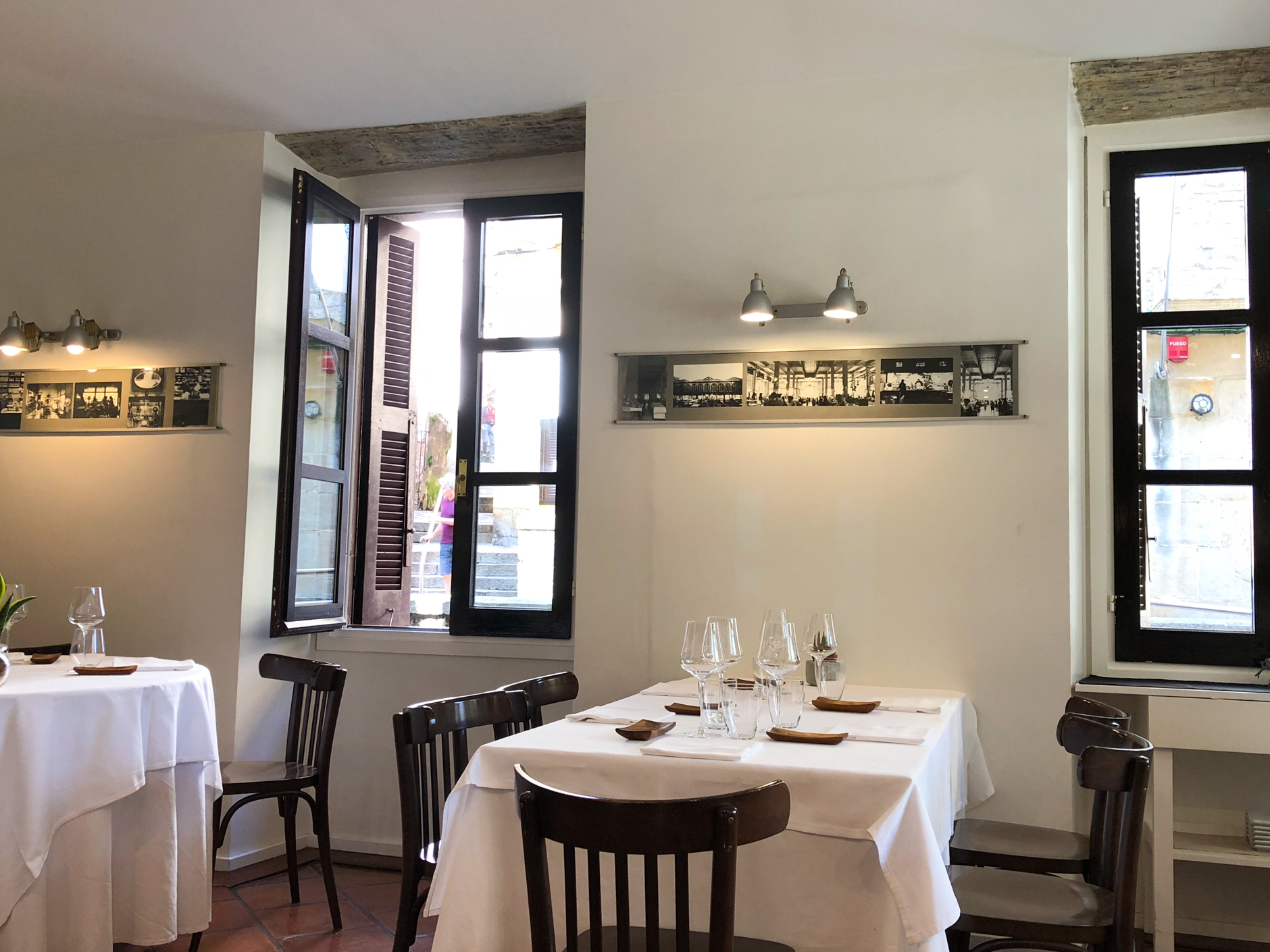
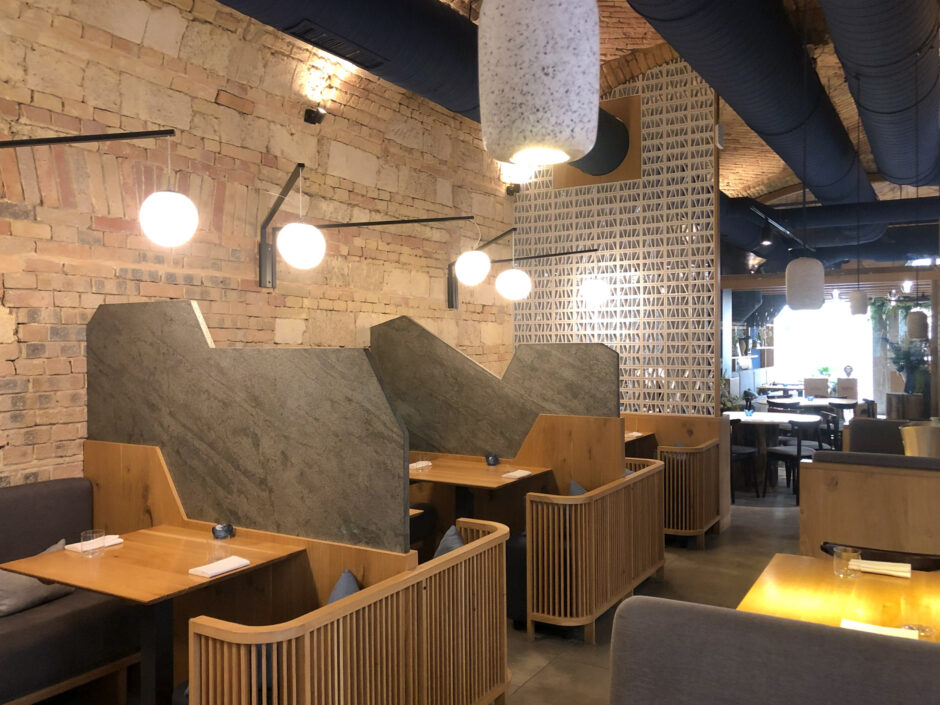
As for the setting, an open and surprisingly calm kitchen greets you on arrival, while the tables between partitions are quite snug, providing a more comfortable experience than the open grid-like arrangement at the brash and touristy Gettó Gulyás. My only minor complaint here was that the lighting was unnecessarily bright, but this was offset by the warm and attentive service. Also, it’s admirable that they don’t always insist on a tasting menu and at lunchtimes offer a five-course ‘partial’ à la carte menu at 41,900 Hungarian Forints (an amount which sounds horrendous on paper but is more like £95 at the time of writing). I say ‘partial’ because there is some room for manoeuvre but not much, just two options for each course, but it provides an alternative to the strictures of a tasting situation.
Starting with a £10 glass of crunchy Baga Extra Brut from Barraida, obligatory amuse-bouches arrived, including a shrimp tartlet and intriguing beef tongue tartare, along with sourdough and a divine olive oil they should really let you buy more of and take home.
Next, trout with sweetcorn and lime. It seemed like a bewildering combination but the trout made sense in this landlocked country (possibly sourced from the Szalajka Valley) and was just very gently kissed by the pan. A little caviar and the first of many beurre blanc-esque sauces completed the dish, counteracting the sweetness of the corn with some acidity. A promising opening.
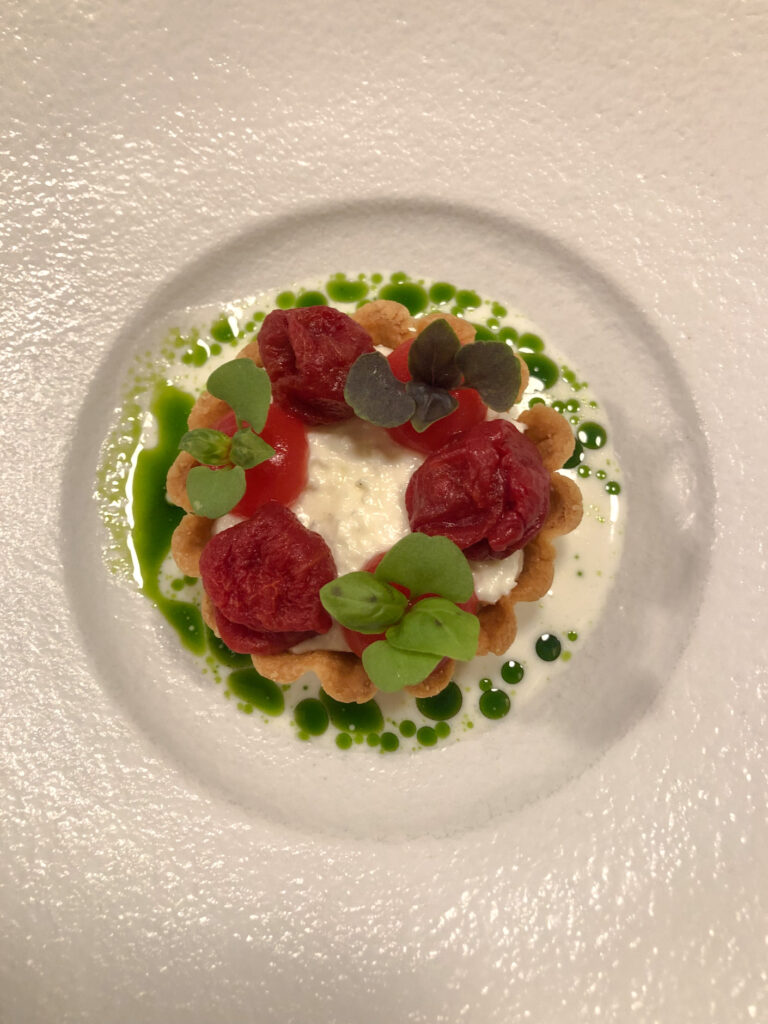
Tomatoes and stracciatella
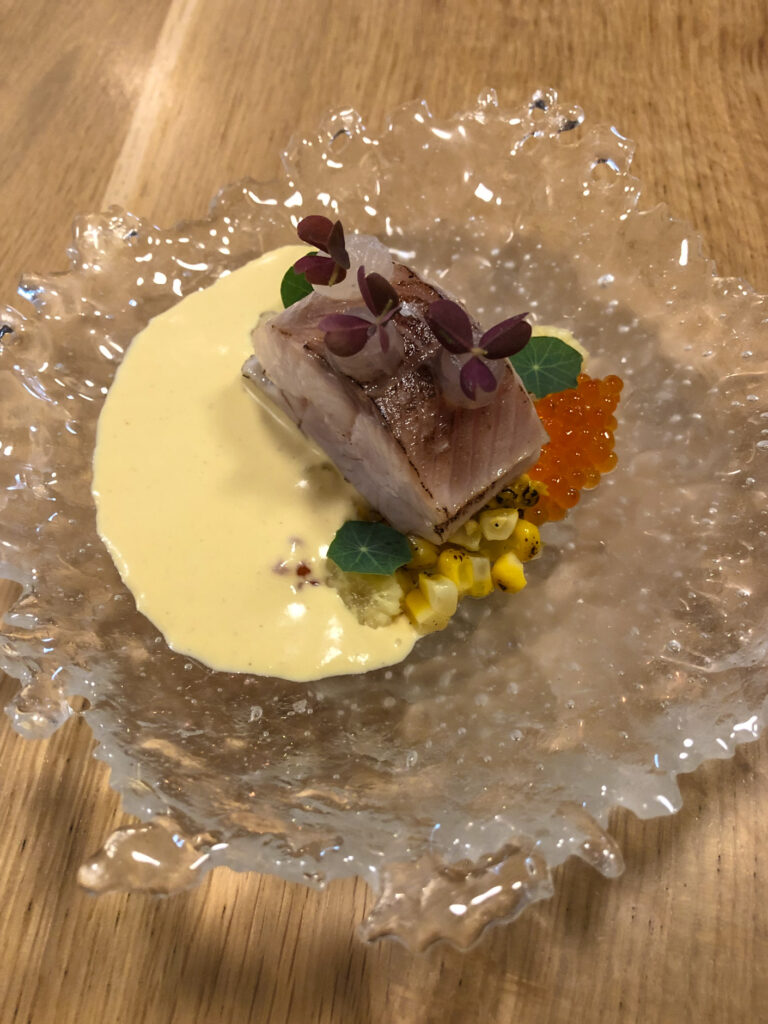
Trout with sweetcorn and lime
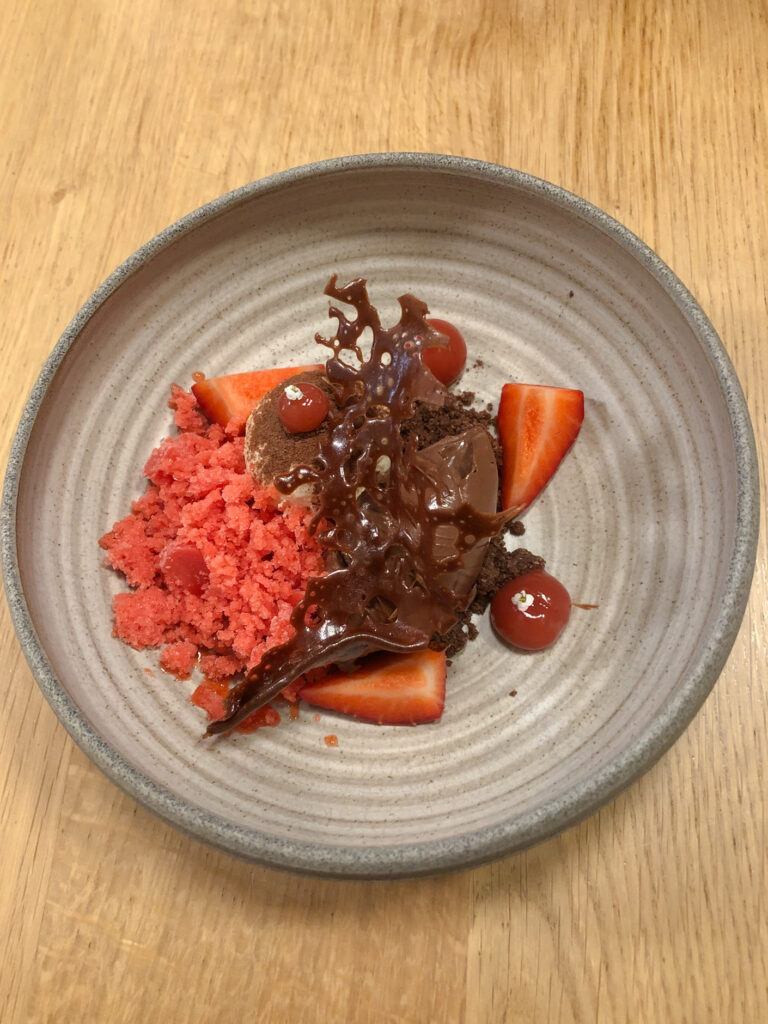
“Tejbegríz” (Hungarian semolina)
A small tartlet of tomatoes and stracciatella followed with a mini gazpacho on the side. This elevated a fairly simple idea with elegant presentation, the stracciatella garlanded with alternating blobs of tomato gel and sundried tomato essence, all completed with a cream sauce split with basil oil.
Then, perhaps drifting westwards to Portugal, cod with tenderstem broccoli. Again, the fish itself was cooked well though its monochrome appearance wasn’t the most appealing; the grey plate and another beige buttery sauce sucked the vitality out of it, but the al dente broccoli added a verdant element and textural contrast.
Onto meat, saddle of lamb was cooked tenderly, though at first I thought the runny Rorschach test on my plate was really taking this obsession with split sauces a bit too far. I assumed it was intentional though, as it honours “Palóc” (a traditional Hungarian sour soup), and forgave the slight seepage from the lamb (though letting it rest a bit longer wouldn’t hurt). This was also an example of the restaurant’s intelligent approach to wine pairing; while I was tempted by a more robust Douro, friendly sommelier Kitti Ujvári (correctly) advised that a Hungarian Pinot Noir would be more appropriate for this, also considering the little pancake of green beans and dill on the side. The 2014 Etyeki Kúria, at roughly £9 a glass, was indeed supple and delicious.
A watermelon ice lolly arrived as a whimsical palate cleanser. Then, for the actual dessert, instead of conjoining cuisines there was a choice of either “Tejbegríz” (Hungarian semolina) or “Queijada de Évora” (a Portuguese custard tart made with sheep’s cheese) – essentially the kind of choice you might get in an exam paper when you may immediately regret the route you go down but you have to stick with it. Wanting to test how they can zhuzh up something as bland as semolina, I went for the former, and fortunately didn’t regret it: while the semolina was predictably stodgy, it was rescued by the ice cream, strawberries and various forms of chocolate. Not ground-breaking but enjoyable nonetheless.
This was a very satisfying and interesting meal with a bill coming to about £130 all in – not cheap, no, but also not as vertiginous as Michelin-starred restaurants elsewhere, and you certainly don’t leave feeling hungry.
Whatever your views on closer European cooperation, this is a very good restaurant that effectively blends ideas from two very different parts of the continent together. If you happen to be in Budapest a meal at Tiago and Éva’s Essência will be worth your time.
Sas utca 17
Budapest, 1051
Hungary
October 2026